
National
BREAKING NEWS
India cannot walk away from its legal obligations; Pakistan
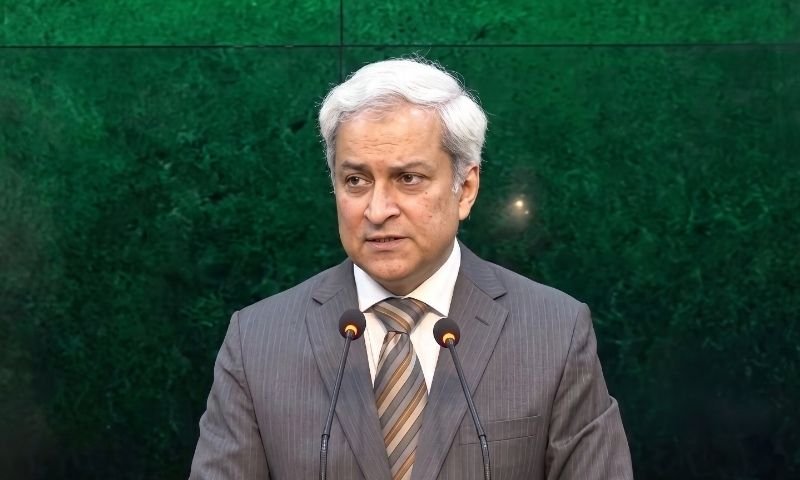
Islamabad-Pakistan on Wednesday said India “cannot walk away from its international legal obligations” simply because the outcomes does not go its way, warning that New Delhi’s conduct on the Indus Waters Treaty (IWT) was “damaging the sanctity of treaties” and the broader system for resolving international disputes.
Addressing weekly press briefing, Foreign Office spokesperson Tahir Hussain Andrabi said India’s behaviour was “undermining confidence in established international legal and dispute-resolution mechanisms,” and could set a “dangerous precedent” for legal agreements over shared resources in other regions of the world. He said unilateral measures in the management of cross-border water in a sensitive region like South Asia were “extremely concerning,” adding that such actions “run counter to sustainable peace and regional stability.”
Andrabi said India “must fully comply with the Indus Waters Treaty and respect the institutional mechanism established under the agreement,” noting that both countries “had formally accepted the framework” of the treaty. He said the Indian foreign ministry’s rejection of the Court of Arbitration’s award “cannot nullify India’s legal obligations,” adding that rejecting the award “will not change” India’s responsibilities under the treaty. “India cannot absolve itself of its obligation to implement the Court of Arbitration’s award,” he said.
Andrabi said Pakistan was “concerned” over growing tensions between the United States and Iran, adding that Islamabad was “in contact” with both countries on efforts to resolve the dispute through dialogue.
He said an increase in tensions was “not in anyone’s interest,” rejecting the notion that recent escalation amounted to a failure of the mediation process.
Andrabi added that Pakistan was “not disheartened” in its efforts for the peace process despite the tensions, and remained “continuously engaged with complete sincerity” in the process. He said PM Shehbaz had met the Iranian president Masoud Pezeshkian, while the deputy prime minister Dar had held “important contacts” with the Iranian foreign minister Abbas Araghchi and other regional leaders.
Andrabi said the Chief of Defence Staff Field Marshal Asim Munir’s visit to Tehran last month had “strengthened efforts” to resolve the Strait of Hormuz dispute, and that Pakistan’s diplomatic efforts on the issue “will continue.” He said he hoped that both parties “will return to the negotiating table.”
The spokesperson said the Islamabad Agreement and the Pakistan-US joint statement “provide a framework for negotiations,” urging both sides to pursue “political and technical talks” for a lasting and sustainable solution. He said Pakistan “will continue its positive and constructive diplomatic efforts” for a durable resolution of the dispute.
Related News

 National
 National

Comments (0)
Leave a Comment