
Our correspondent
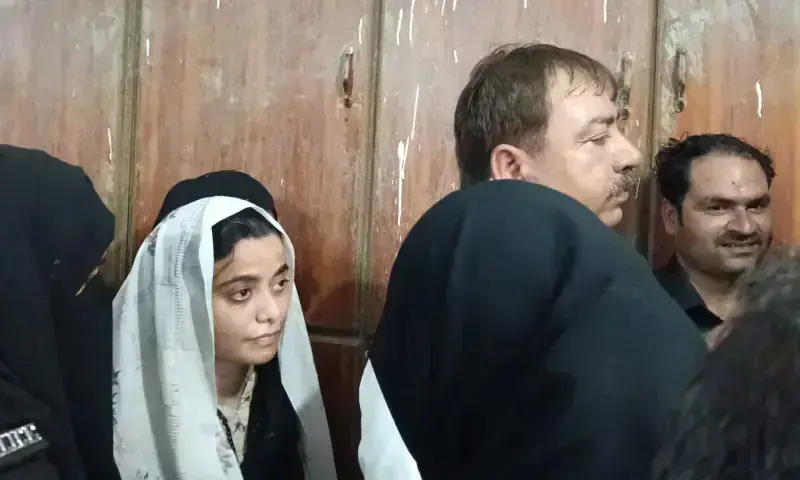
ISLAMABAD: The Senate Standing Committee on Interior’s Sub-Committee on Monday took up the high-profile case of alleged drug trafficking suspect Anmol Pinky, directing authorities to clarify conflicting accounts regarding her arrest and to further investigate her alleged criminal network.
During the meeting, committee convener Senator Saifullah Abro questioned the contradictory statements made by law enforcement agencies over whether the suspect was arrested in Karachi or Lahore. He said the committee had been informed in previous meetings that Anmol Pinky was apprehended in Lahore, while Sindh Police now maintained she had been arrested in Karachi.
Abro directed the Interior Ministry to write to the Chief Secretary Sindh, seeking a clear explanation over the discrepancy. He remarked that the matter was far too serious to be treated as an ordinary criminal case and questioned who was allegedly supporting the accused.
The committee also instructed the Federal Investigation Agency (FIA) to trace the mobile phone records of both the suspended Station House Officer (SHO) and Anmol Pinky, after lawmakers raised concerns over the level of protocol allegedly provided to the accused during her court appearance.
“When she was produced before the court, around 20 mobile police vehicles accompanied her. Even senators do not receive such security,” Senator Abro said, adding that tracing communication records could reveal those allegedly backing the suspect.
Sindh Police informed the committee that the concerned SP and SHO had already been suspended. Officials also briefed lawmakers on items recovered from the accused and disclosed that a letter had earlier been sent to the FIA regarding the case.
Officials from the Interior Ministry clarified that the matter also involved a federal intelligence agency in addition to the FIA.
According to Sindh Police, Anmol Pinky was allegedly operating an online narcotics distribution network from Lahore after her marriage there. Police claimed her first husband, identified as businessman Rana Nasir, was also involved in drug trafficking, while her second husband was a retired SP of the CIA Lahore.
Police alleged that she sold narcotics online and managed an organised network through cyberspace. Authorities said investigations into her network began in 2018, with the Counter-Terrorism Department (CTD) first arresting two of her delivery riders.
Officials informed the committee that 28 criminal cases had been registered against the network, including five in Punjab, while the Anti-Narcotics Force (ANF) and other agencies were also pursuing investigations. Since 2018, at least 25 riders linked to the network had been arrested.
The committee was told that two accountants allegedly handled financial transactions for the network, while bank accounts and identity documents associated with the accused had previously been seized. Police further alleged that Anmol Pinky attempted to obtain a new CNIC using another person’s identity despite her passport and identity card being blocked.
Officials revealed that a man named Sameer, arrested several months before Anmol Pinky, had allegedly opened bank accounts that were later used by the accused.
The FIA assured the committee that it possessed a specialised anti-money laundering team and would investigate the identity document and passport-related allegations. The committee also sought complete details of data recovered from Anmol Pinky’s mobile phones.
During the briefing, Sindh Police further disclosed that investigations had uncovered links to Nigerian nationals residing in Lahore, who were ostensibly engaged in the textile business but were allegedly involved in drug trafficking. One Nigerian suspect has already been arrested, while most delivery riders operating in Karachi have also been taken into custody.
Sindh Police officials acknowledged the support provided by the FIA and the National Cyber Crime Investigation Agency (NCCIA) during the investigation.
Senator Abro concluded that the accused had developed a sophisticated “business model” for online drug distribution, stressing that all individuals facilitating the network must be identified and brought to justice.



Comments (0)
Leave a Comment