
National
BREAKING NEWS
Army top brass vows to ensure Pakistan’s rightful water share, continue anti-terror operations
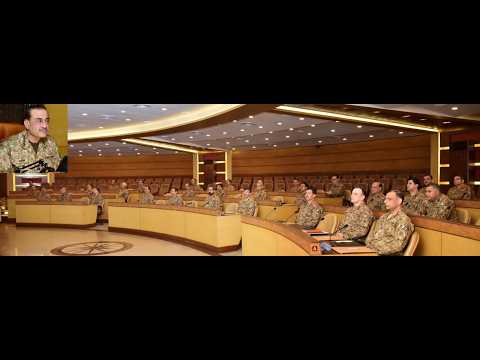
Army top brass vows to ensure Pakistan’s rightful water share, continue anti-terror operations
RAWALPINDI: Pakistan's military leadership on Monday reaffirmed its commitment to safeguarding the country's rightful share of water under the Indus Waters Treaty (IWT), vowing to take all necessary measures in line with government directives.
The commitment was made during the 276th Corps Commanders' Conference (CCC), chaired by Chief of Defence Staff and Chief of Army Staff Field Marshal Asim Munir at the General Headquarters (GHQ), according to a statement issued by the Inter-Services Public Relations (ISPR).
The forum reviewed India's stance on the Indus Waters Treaty and reiterated the guidance issued by the National Security Committee (NSC) on April 24, 2025, following India's decision to place the treaty in abeyance.
"The forum expressed its resolute commitment to undertake all measures necessary to ensure the availability of Pakistan's rightful share of water in accordance with government directives and the aspirations of the people of Pakistan," the ISPR said.
The military leadership also condemned what it described as ongoing human rights violations and demographic changes in Indian Illegally Occupied Jammu and Kashmir (IIOJK), reiterating Pakistan's diplomatic, political and moral support for the Kashmiri people. It maintained that lasting regional peace depends on granting Kashmiris their right to self-determination in accordance with United Nations Security Council resolutions.
The conference reviewed the regional security situation and alleged that, following last year's military confrontation with India, New Delhi had increasingly relied on externally supported hybrid warfare and disinformation campaigns to destabilise Pakistan. The forum condemned any alleged state support for proxy groups and vowed to counter such threats with "strategic clarity and firm resolve."
The commanders also appreciated Pakistan's role in promoting dialogue, de-escalation and regional stability, including its efforts to facilitate peace negotiations between the United States and Iran. The forum reaffirmed Pakistan's commitment to peaceful conflict resolution, respect for international law and regional cooperation.
Addressing terrorism, the conference expressed concern over the alleged use of Afghan territory by groups that Pakistan says are supported by India to launch attacks inside the country. The ISPR said the forum stressed that lasting regional peace requires preventing the use of Afghan territory by militant groups targeting Pakistan.
The military leadership reaffirmed Pakistan's right to defend its citizens against terrorism and announced that intelligence-based operations (IBOs) under Operation Ghazab-lil-Haq would continue against militant threats originating from across the border.
Besides military operations, the forum emphasised the need to strengthen governance in conflict-affected areas by improving public services and dismantling what it described as the nexus between terrorism and organised crime.
The commanders offered prayers for members of the armed forces, law enforcement agencies and civilians who lost their lives in the line of duty, reaffirming that their sacrifices remain central to Pakistan's security and resilience.
The conference also reviewed the country's overall security environment and expressed satisfaction with the operational preparedness and combat readiness of the armed forces.
In his concluding remarks, Field Marshal Asim Munir directed commanders to accelerate implementation of the military's multi-domain transformation plan to meet evolving security challenges. He also called for maintaining the highest standards of vigilance, operational readiness and professional excellence to effectively respond to conventional, sub-conventional and hybrid threats while safeguarding Pakistan's sovereignty and national interests
Comments (0)
Leave a Comment